
HERS RATING & STRETCH CODE COMPLIANCE IN NORFOLK COUNTY, MA
Guiding custom homes and large residential projects in Norfolk County through HERS verification, Stretch Code compliance, and energy optimization from design through final inspection.
BUILDING SCIENCE & HERS CHALLENGES
IN NORFOLK COUNTY
Executing high-performance residential new construction, large-scale teardowns, and extensive home additions across Norfolk County requires balancing modern efficiency targets with large square-footage floor plans, complex HVAC designs, and local municipal bylaws. From custom new builds in Specialized Opt-In communities like Brookline, Wellesley, Needham, Canton, and Dedham to high-volume teardowns and additions in Westwood, Dover, Sharon, Medfield, and Franklin, local building enclosures dictate real-world performance.
Under Massachusetts Stretch and Specialized Opt-In codes (225 CMR 22.00), achieving a passing HERS score—HERS 45 or lower for all-electric new homes, HERS 42 for mixed-fuel, HERS 52–55 for Accessory Dwelling Units (ADUs), and HERS 65–70 for major additions—requires early optimization of heat pump sizing, water heating, and continuous air sealing to lock in the low envelope leakage rates needed for a passing energy model.
The most critical enclosure and mechanical factors we model and optimize early include:
Managing High Window-to-Wall Ratios: Balancing expansive glazing areas, high solar heat gain coefficients (SHGC), and frame thermal bridging on luxury designs to control heat loss, protect HERS scores, and prevent oversized equipment specifications.
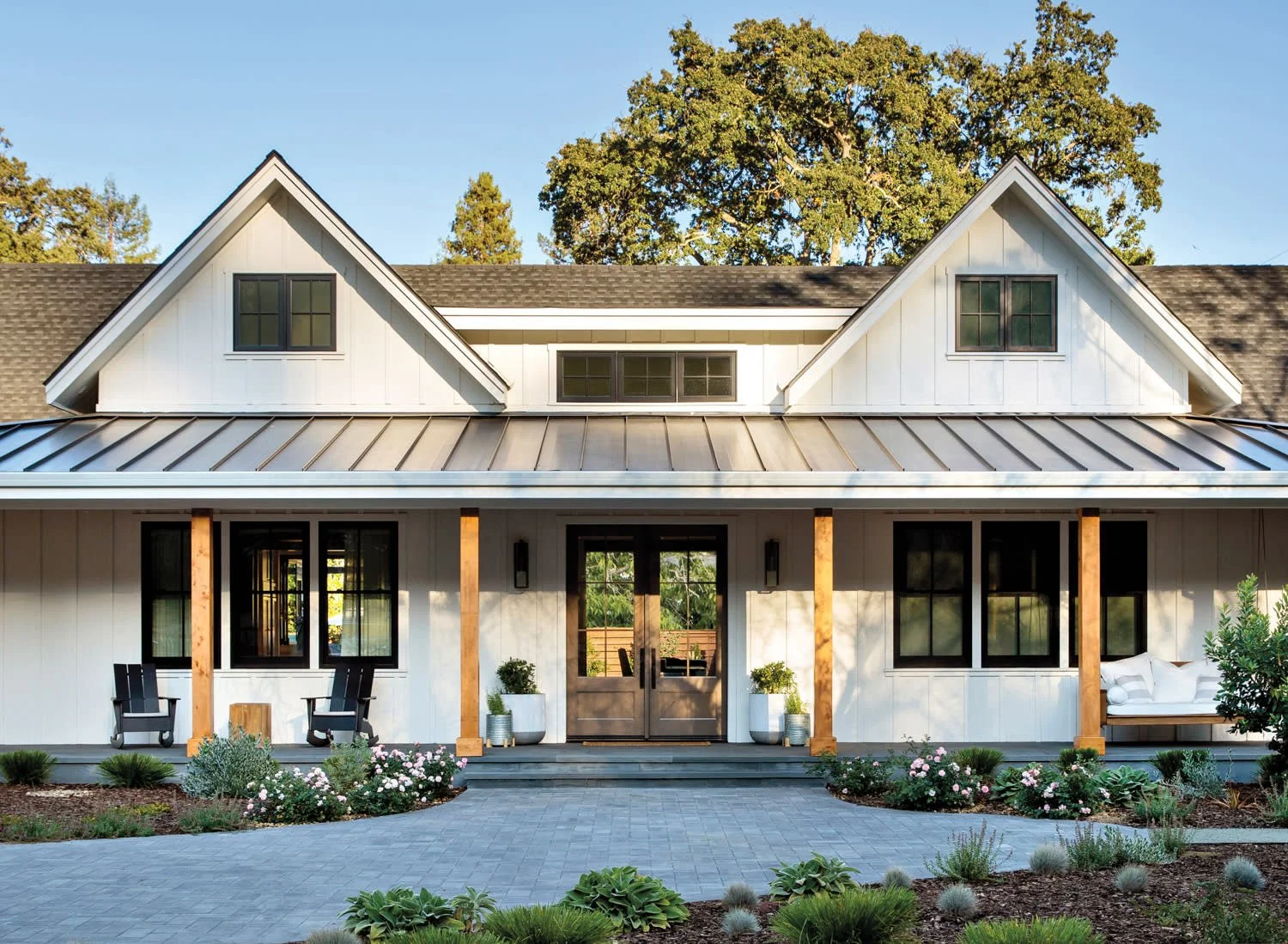
Air Barrier Continuity on Intricate Framing: Executing continuous air sealing across complex architectural features—including vaulted ceilings, dormers, cantilevered bump-outs, and multi-gabled roof transitions—to hit aggressive blower door targets.
Specialized Opt-In & Net Zero Pathways: Guiding custom builds through all-electric heat pump designs, pre-wiring mixed-fuel builds, and integrating mandatory on-site solar PV array sizing to clear municipal permit reviews smoothly.
Coordinating Multi-Zone HVAC & ERVs: Right-sizing cold-climate heat pumps, compact duct distribution, and ERV/HRV balanced mechanical ventilation across multi-story estates to eliminate hot/cold spots and maintain indoor air quality.
Balancing Additions with Existing Structures: Mitigating the performance drag that an old, uninsulated legacy structure places on a high-efficiency new addition under combined-structure HERS modeling rules.
Pre-Permit Planning Resources:
Learn how to design a continuous and durable envelope in Massachusetts:
Exterior Air Barrier Strategies for Massachusetts Homes
Discover how to strategically improve your score without unnecessary upgrades:
HERS Rating Optimization in MA
By modeling these elements early, builders and homeowners can meet required HERS targets while delivering comfortable, durable, and efficient homes.
UNDERSTANDING ENERGY CODE COMPLIANCE IN NORFOLK COUNTY
Energy codes ensure that homes and buildings in Norfolk County, MA meet minimum efficiency standards, reducing energy waste, lowering utility costs, and improving indoor comfort. With Massachusetts’ commitment to aggressive climate goals, these codes play a crucial role in cutting carbon emissions, promoting sustainable construction, and protecting homeowners from high energy expenses while increasing property value.
In Norfolk County, many projects involve custom home construction, tear-down rebuilds, and large additions where performance expectations are high from the outset. Meeting required HERS Index targets affects envelope design, air tightness strategy, mechanical system selection, and ventilation planning. Early energy modeling during design ensures compliance is achieved efficiently, without unnecessary upgrades or costly redesigns during construction.
Massachusetts offers three main paths to energy code compliance:

Base Energy Code
A straightforward checklist of insulation, mechanical, and envelope requirements. A HERS rating is not required.
Stretch Energy Code
Requires a certified HERS Rating for all new construction, additions exceeding 1,000 sq ft (or additions that double the home's conditioned floor area), and major Level 3 renovations exceeding 1,000 sq ft. Standard new builds must achieve a HERS 45 or lower for all-electric design, or HERS 42 or lower for mixed-fuel builds, while major additions and rehabs are modeled under a relaxed target of HERS 65–70.
Specialized Opt-In Energy Code
Enforces stricter Net Zero Building pathways for new construction (additions and renovations continue to follow standard Stretch Code rules). New builds must achieve HERS 45 or lower for all-electric design, or HERS 42 or lower for mixed-fuel builds. Mixed-fuel projects must also be fully pre-wired for future electrification and generate on-site solar power from the available solar zone area.
Working with a local HERS rater ensures your project meets all code requirements efficiently while taking advantage of available rebates, helping homeowners and builders complete projects on time and on budget.
PROVIDING HERS RATINGS ACROSS
NORFOLK COUNTY
Every town in Norfolk County follows one of Massachusetts’ energy code pathways. Spectrum Energy provides HERS ratings for new construction, additions, and major renovations across Norfolk County, Massachusetts, including: Quincy, Braintree, Canton, Walpole, Needham, Westwood, Dedham, and Franklin.
Use this quick guide to see what applies in your community, or check your town in our interactive HERS database.
-
Avon
Foxborough
Holbrook
What Is the Maximum HERS Rating Allowed in Massachusetts?
Maximum HERS score requirements vary depending on the project type and the energy code pathway used for compliance. Learn more about current thresholds for new construction, additions, and major renovations on our Massachusetts Energy Code overview page.
ACE YOUR HERS RATING IN NORFOLK COUNTY
Planning a new home, major renovation, or addition in Norfolk County? Our HERS Rating Guide gives you the insider strategies to confidently meet Stretch Code and Specialized Opt-In requirements while building a high-performance, energy-efficient home.
Inside the guide, you’ll learn how to:
Optimize your building envelope – walls, roof, floors, and air sealing and insulation
Use energy-smart systems and appliances – HVAC, lighting, and water heating
Select efficient windows and doors – reduce energy loss and improve comfort
Ensure balanced ventilation – ERVs for indoor air quality
Sign up today to receive your copy of our comprehensive Norfolk County HERS Rating Guide and get the tools you need to ace your HERS Rating from day one.


SAVE THOUSANDS WITH INCENTIVE PROGRAMS IN NORFOLK COUNTY
As certified HERS Raters, we help Norfolk County homeowners and builders take full advantage of Mass Save incentives for new construction, major additions, and renovations.
By assessing your home’s energy performance and identifying the right efficiency strategies, we help you:
Maximize available rebates and incentives
Reduce upfront construction costs
Lower long-term utility bills
Ensure compliance with local energy codes
With our guidance, you can create a more energy-efficient, cost-effective home from day one.
SAVE THOUSANDS WITH INCENTIVE PROGRAMS IN NORFOLK COUNTY
As certified HERS Raters, we help Norfolk County homeowners and builders take full advantage of Mass Save incentives for new construction, major additions, and renovations.
By assessing your home’s energy performance and identifying the right efficiency strategies, we help you:
Maximize available rebates and incentives
Reduce upfront construction costs
Lower long-term utility bills
Ensure compliance with local energy codes
With our guidance, you can create a more energy-efficient, cost-effective home from day one.
WHAT OTHERS ARE SAYING

FAQs
-
Ideally during the schematic design phase. Teardown-rebuilds in suburban infill lots require early energy modeling to select high-performance window U-factors, optimize continuous exterior insulation, and size cold-climate heat pumps before plans are submitted to municipal building departments. Early involvement prevents costly mid-construction redesigns and inspection delays.
-
Yes. Achieving low HERS scores is rarely about adding expensive insulation; it is about strategic air sealing, right-sizing HVAC equipment, and optimizing mechanical ventilation (ERVs). Strategic early design often lowers upfront mechanical costs and unlocks thousands in Mass Save new construction rebates to offset building expenses.
-
Yes. Nearly all Norfolk County municipalities enforce the Stretch or Specialized Opt-In Energy Code, requiring a certified HERS Rating for new residential construction. New builds must achieve a HERS 45 or lower for all-electric design or HERS 42 or lower for mixed-fuel builds to secure building permits and final Certificates of Occupancy.
-
Homes with expansive glazing, vaulted ceilings, and large footprints face higher thermal loads and air leakage potential. Additionally, under the Specialized Opt-In Code (enforced in towns like Brookline, Wellesley, Needham, Canton, and Dedham), new homes exceeding 4,000 sq. ft. must follow an all-electric or net-zero pathway. Early energy modeling ensures envelope assemblies and heat pump sizing are optimized before framing begins.